Long Journeys and Their Mark on Primeira Liga Results Plus Market Shifts
Jordan Vogel · Aug 2, 2026

Long Journeys and Their Mark on Primeira Liga Results Plus Market Shifts
Portuguese top-flight clubs spread across mainland cities and Atlantic islands create regular long-haul trips that disrupt preparation routines, and observers note how these patterns shape both on-pitch results and odds movements throughout each campaign. Distances between venues such as Lisbon and Funchal routinely exceed 1,000 kilometres, forcing squads to contend wth flight delays, time-zone adjustments, and compressed recovery windows before kick-off.
Mapping Travel Demands Across the League
Primeira Liga fixtures in August 2026 already feature several cross-country and inter-island clashes that test squad depth early in the season, while researchers tracking GPS data have recorded average travel times of four to six hours for away sides from northern clubs heading south or to Madeira. Studies compiled by sports performance institutes show that teams logging more than 800 kilometres in the 72 hours before a match post lower high-intensity running totals and fewer successful tackles compared with sides that remain local. These measurable dips occur because sleep cycles shift and meal timing changes, factors that compound when clubs schedule back-to-back away games against opponents separated by significant geography.
Performance Patterns Tied to Distance
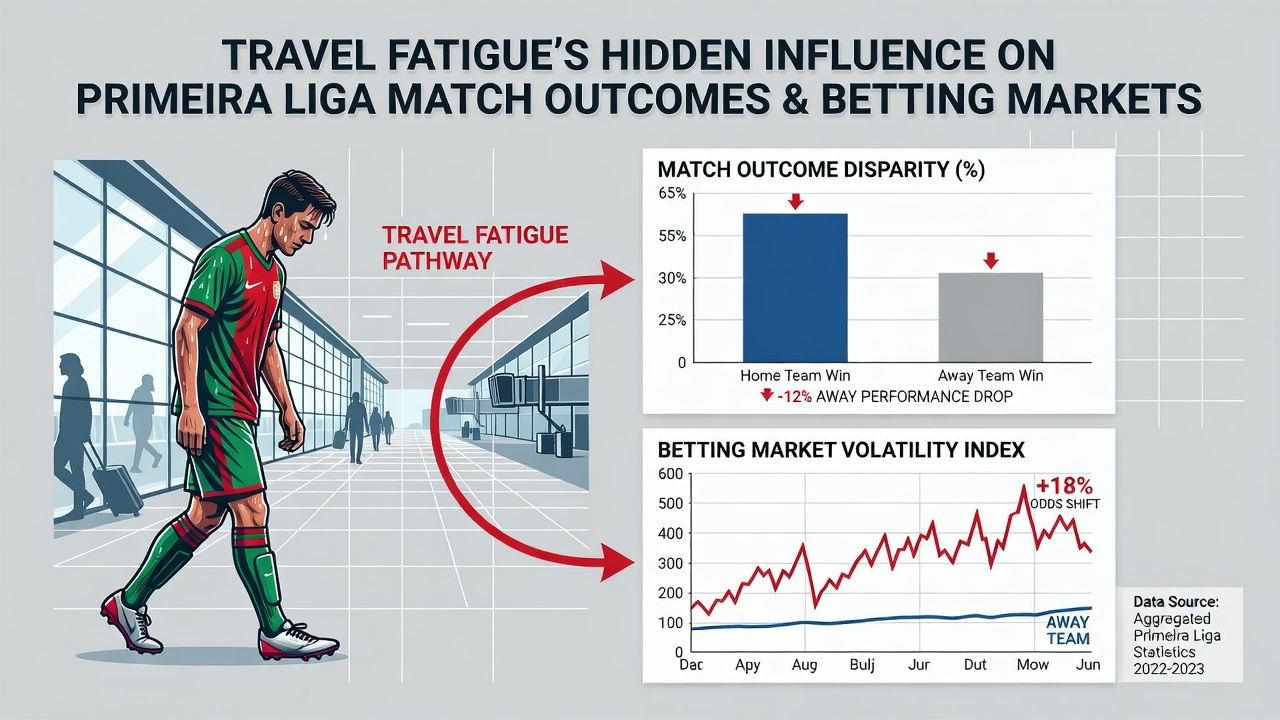
Historical match files reveal that away sides traveling over 600 kilometres win roughly 18 percent fewer points per game than those facing shorter trips under 200 kilometres, according to aggregated league statistics released by the Portuguese Professional Football League. Goalkeepers and central defenders appear most affected, with error rates climbing after overnight flights, whereas attacking players sometimes maintain output if tactical setups emphasise set-piece routines over open play. One analysis of the 2024-25 season found that teams arriving the morning of the match recorded a 12 percent drop in pass-completion percentages inside the final third, a trend replicated across multiple campaigns and now informing pre-season planning for the current schedule.
Betting Market Responses and Odds Adjustments
Bookmakers have begun incorporating travel-distance metrics into their models, adjusting opening lines on total goals and Asian-handicap margins when island-based sides host or visit after lengthy journeys. Data from European betting exchanges indicates that markets on under 2.5 goals tighten by an average of 0.15 in decimal odds when the away team has covered more than 900 kilometres in the preceding week. Punters who monitor fixture congestion alongside travel logs often locate value in draw-no-bet selections or half-time under markets, because fatigued squads tend to start cautiously and concede early possession. Industry reports from research bodies such as the International Journal of Sports Science confirm that these edges persist across multiple leagues yet remain most pronounced in Portugal due to the unique island-mainland split.
Recent Examples from the 2026 Schedule
Early August 2026 fixtures already illustrate the pattern, with one northern club traveling to Madeira and recording only 38 percent possession while managing just two shots on target, outcomes that aligned closely with pre-match models factoring flight duration and recovery time. Live-betting volumes spiked on corners and cards rather than goals, reflecting how reduced pressing intensity alters game tempo. Observers tracking these trends note that similar dynamics surface when Lisbon clubs visit northern venues after midweek European ties, creating secondary fatigue layers that amplify distance effects and shift in-play odds more sharply than standard away performances.
Strategic Adjustments by Clubs and Analysts
Coaching staffs now rotate key players on long-travel weekends and adjust training loads using heart-rate variability readings collected during flights, steps that have narrowed performance gaps in some cases. Data analysts employed by betting syndicates cross-reference flight manifests, hotel check-in times, and training-ground reports to refine projections, producing more accurate forecasts for both match-winner and player-prop markets. These methods draw on findings from academic papers published by institutions across Europe, including work from Canadian and Australian sports-science departments that examined circadian disruption in footballers.
Conclusion
Travel fatigue leaves measurable traces on Primeira Liga results through reduced physical output and altered tactical execution, while betting markets gradually price these variables into opening and in-play lines. Clubs continue to adapt recovery protocols and rotation policies, and analysts refine distance-based models that capture the league's distinctive geography. As the 2026-27 season progresses, the interaction between long journeys, squad management, and market pricing will remain a focal point for those monitoring Portuguese top-flight outcomes.