Disciplinary Shifts in Europe's Top Flights Drive Growth in Card-Focused Betting Niches
Dana Frank · Aug 4, 2026
Disciplinary Shifts in Europe's Top Flights Drive Growth in Card-Focused Betting Niches
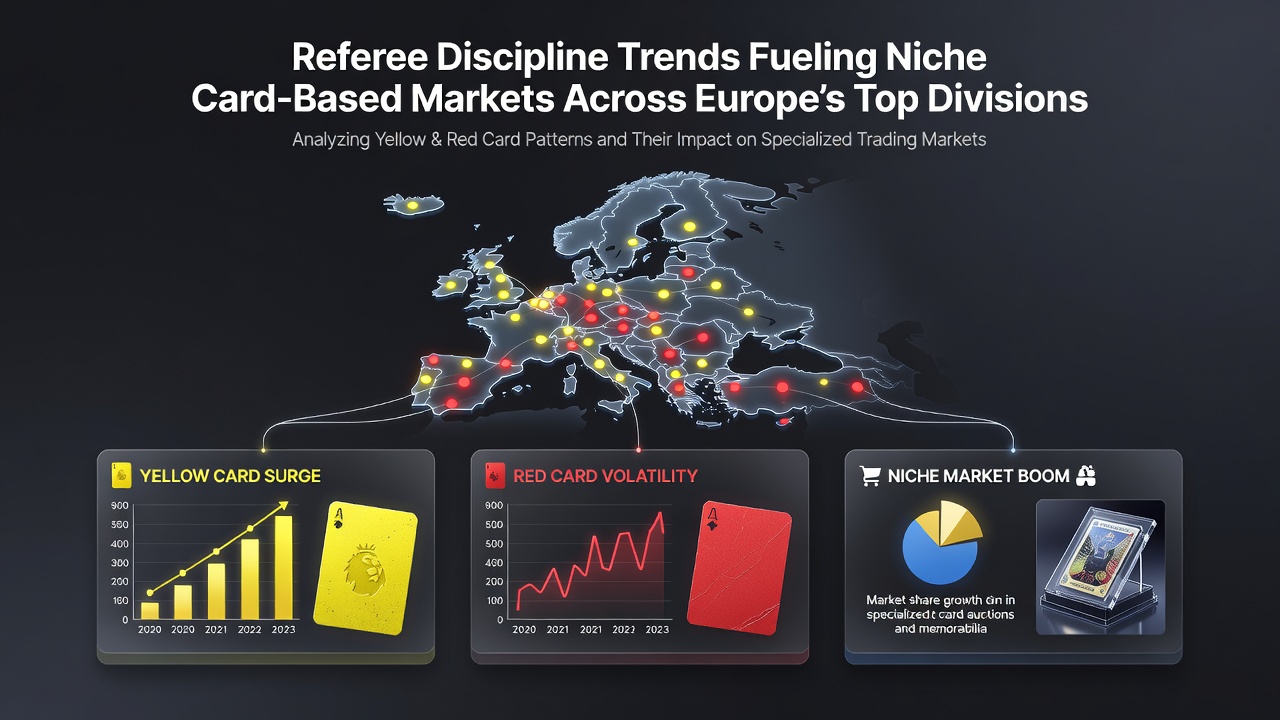
Referee discipline patterns across Europe's major leagues have produced measurable increases in card issuances during recent campaigns, and these shifts now support dedicated betting segments that focus on bookings rather than goals or corners. Data compiled by league authorities shows consistent rises in yellow and red cards per match in several competitions, which has encouraged operators to expand options such as player-specific card markets and team total bookings.
Observers tracking the 2025/26 season noted that Bundesliga fixtures averaged 5.2 yellow cards per game, while Serie A recorded 4.9 and La Liga posted 4.7 according to official match reports. These figures represent a continuation of upward trends that began after the introduction of VAR protocols in earlier years, though the rate of change has varied by competition. The pattern holds particular interest for markets that settle on individual player sanctions or cumulative cards across a fixture.
League-Specific Discipline Data
Each top division maintains its own refereeing standards and foul thresholds, which creates distinct card profiles that bettors examine when selecting wagers. Bundesliga referees have issued the highest volume of cards among the five major leagues over the past three seasons, with statistics from the DFL indicating an average of 0.18 red cards per match in 2025. In contrast, the Premier League averaged 0.12 red cards, though yellow card totals remained steady at 4.1 per game.
La Liga and Ligue 1 display intermediate levels, with data from their respective federations showing gradual increases in second-yellow dismissals during away fixtures. Serie A stands out for higher card counts in matches involving promoted sides, where newer teams encounter stricter officiating interpretations early in the campaign. These variations allow niche markets to price outcomes such as "over 5.5 cards" or "player to receive two bookings" with greater granularity than broader goal-based propositions.
Market Expansion and Operator Responses
Bookmakers have responded to the discipline trends by introducing granular card propositions that cover individual players, halves, and even specific time bands within matches. Figures released by the European Betting Association indicate that card-related wagers now account for approximately 8 percent of total football betting volume in regulated European markets during the 2025/26 season. This share has grown steadily since 2023 as operators refine models that incorporate referee historical data alongside team disciplinary records.

Specialist accumulators that combine multiple card outcomes have gained traction in several jurisdictions. Operators report increased activity in markets that require a named player to receive a card before a certain minute or that combine team totals with specific referee assignments. The availability of detailed match data from sources such as Opta has supported these offerings by providing the statistical depth needed to price niche selections accurately.
Referee Assignments and Predictability Factors
Referee rotation policies affect card expectations because individual officials maintain consistent foul thresholds across seasons. Analysis of appointment patterns in August 2026 shows that leagues continue to assign referees with established track records to high-stakes fixtures, which allows market participants to reference historical card averages when assessing lines. Those who monitor these assignments often cross-reference past performances against the competing sides' average fouls committed and conceded.
Research from the University of Loughborough's sports analytics group has examined correlations between referee experience levels and card rates, finding that newer officials in top divisions tend to issue slightly higher volumes of cautions during their initial seasons. Such findings feed into pricing models used by betting platforms that offer card-specific products across multiple European competitions.
Conclusion
Discipline trends in Europe's leading divisions continue to supply measurable inputs for card-focused betting segments, with league authorities publishing the underlying statistics that support these markets. As the 2026/27 season approaches, the established patterns in yellow and red card volumes provide ongoing data points that shape the structure and availability of niche propositions in regulated environments.